Review and Project Management, in the Same Window
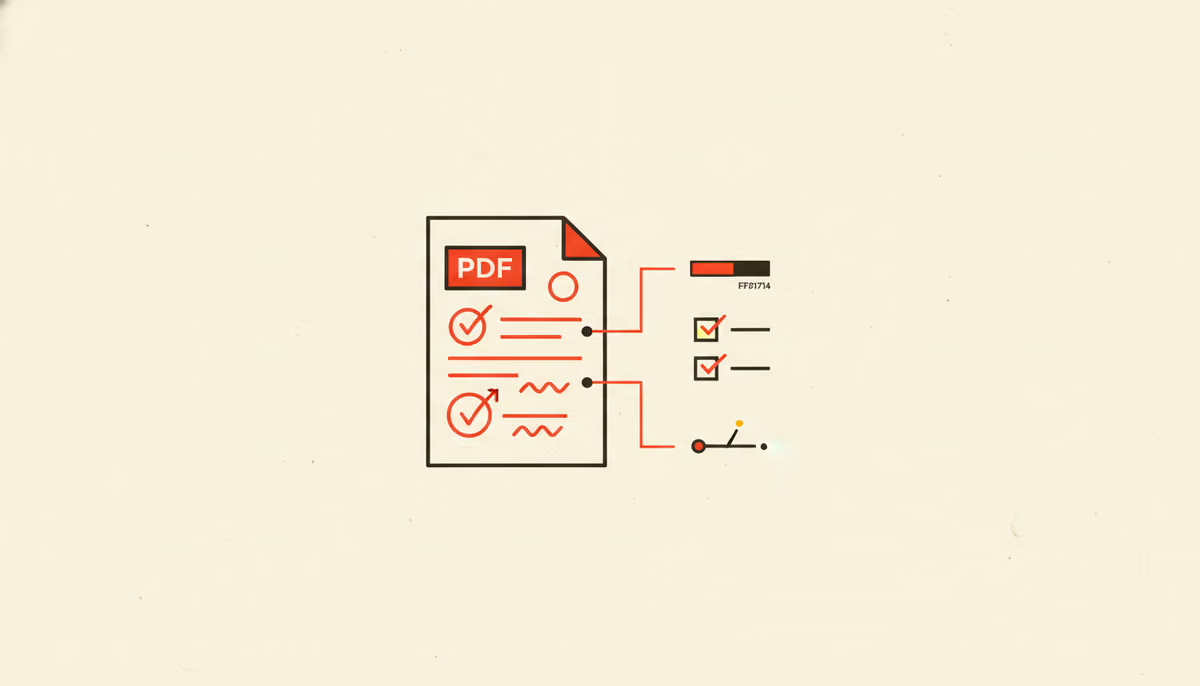
Open the PDF in one app to read the feedback. Switch to the project tracker to update status. Switch to email to chase the reviewer who went quiet. Switch back. By lunchtime you've spent more time moving between tools than working inside any of them. That switching never shows up on your calendar, which is exactly why it's so expensive.
It got worse when teams went distributed. Remote and hybrid work turned the hallway conversation into a tool — several tools, really — and the gaps between them became the place work quietly goes to die. Every gap is a handoff, and every handoff sheds a little context.
What 'the same window' removes
When the review and the project status share a home, feedback and progress stop being two systems you keep in sync by hand. The annotation you just made and the dashboard that says 'this document is 80% reviewed' are reading from the same underlying facts. Nobody re-keys anything, because there's nothing to re-key.
Day-to-day, that deletes a whole category of busywork:
- Re-downloading the latest file before every review session.
- Keeping a separate spreadsheet of who has and hasn't responded.
- Wondering which version a given comment was even about.
- Copy-pasting feedback into a status report by hand.
Control who does what
Not every reviewer should have the same powers. A client might only need to read; an editor needs to mark up; a collaborator might need the file itself. Role-based permissions make that explicit instead of hoping everyone behaves — and reply-only mode on a resubmission stops a second round from turning into a free-for-all.
| Role | What they can do | Good for |
|---|---|---|
| View | Read the document | Clients and sign-off |
| Annotate | Comment and mark up | Reviewers and editors |
| Download | Save a local copy | Collaborators who need the file |
From there, visibility is the payoff: a live picture of review status, and — on the Premium plan — the option to export every comment and reply to Excel when someone wants a report. It all runs in the browser, no Adobe Reader required, so a reviewer on a borrowed laptop is one link away from contributing. If the file pile itself is your bottleneck, turning that pile into a system comes first.
The point isn't more features — it's fewer windows. When the document, the feedback, and the status occupy one place, the reconciliation tax disappears and you get your mornings back. See how a review runs end to end, or try GoSubmit free and feel the difference on your next project.